Slider


Search CarGuide.PH

Showing posts with label Driver's Seat. Show all posts

Sunday, March 8, 2020

5 Thoughts on the 2020 Subaru WRX


The Subaru WRX has been a choice for the brand’s long-time fans. But with a turbocharged engine and the iconic hood scoop, it’s also easily recognized even by the most casual of motorists who’ve come to know what those three letters—W-R-X—stand for. Having been a fan of the Levorg for years, I finally had the opportunity to try out the very platform that it was based off of. First, it was refreshing to finally be driving a sedan again. Secondly, my conversations with die-hard Suabru fans had instilled the impression that the WRX was a force to push.

For a woman who lives through Manila’s congested streets on the daily, there are a number of factors that influence her decision in choosing the right car. The spec, the space, the practicality, the handling, the fuel economy. And then there are the exceptions, for whom performance and driving comfort take precedence. In this story, here are the reasons why (and why not) the decidedly male-centric Subaru WRX could also be the right choice for the modern woman.


#1. Safety, Leveled-Up

As the award-winning safety technology for Subaru, EyeSight has finally made it to the WRX, and it makes a solid difference in turning the well-loved race machine into a practical city driver. This, coupled with the standard safety features, make it a companion you’re confident to tackle the daily grind with.


#2. Turbocharged

Speed is the name of the game and it’s no wonder that women are up on their feet early, set to tackle the day’s list of tasks one after the other. For the career-driven woman, the performance of the WRX offers the efficiency of a reliable companion—the 265-horsepower 2.0-liter 4-cylinder engine gives it more than enough power. Oh, and despite the WRX still not using the Subaru Global Platform, it’s still a stable, adaptive car to drive around even through Manila’s uneven, pothole-ridden streets.


#.3 Driver In-Control

Subaru vehicles are known for its superior handling and stability control. These are features that are crucial, not just for the track driver, but more so for the regular commuter. For women, reliability is an important factor — a car that will take them through the day’s errands without breaking a sweat, while making them feel safe and in control. This is what the WRX offers. It is a step-up from your usual sedan, giving us women on-road confidence.


#4. Practical, Yet In-Style

There’s no doubt about it: the Subaru WRX continues to turn heads. It is fair warning that fellow drivers may challenge you to a drive-off at a stoplight. However, the WRX proved to be as practical as it is stylish. On the outside, it has got all the makings of a racing rock star, from the low hoodline to the solid-looking 18-inch wheels. On the inside, it has got generous cargo room, albeit not as much as its wagon derivative, comfortable plush leather seating, and up-to-the minute infotainment system.

On that note, I was pleased to discover that the WRX still come with the original Subaru Starlink system—a far better cry than the Panasonic head unit that is installed in the 2019 Forester. Just the feature of the Apple CarPlay was a winner in itself.


#5. It’s Not Perfect Though

The downside of the WRX is that because it was meant to be a performance-oriented sedan, the ride is decidedly bouncier than I would have liked—more so than even the Levorg. Going over speed bumps have to be done slower than you would the Levorg and you can feel the road imperfections more, as well.

In addition, seating is also tighter for both the front and back rows. The bucket seats for driver and passenger are comfortable, but does not offer much wiggle room. The back row, on the other hand, is designed for 2 average-sized males, or perhaps 3 small children.


The WRX serves up the right combination of form factor and function, not just for the city dweller, but those who prefer to do more enthusiastic style of driving. It serves all the right notes—perhaps save for the aforementioned ride and space for the daily grind. In this regard, the Subaru WRX is a chosen few, even more so women. However, for those who appreciate what it can do, it delivers all the right notes.

Words and photos by Gen Tiu.

Sunday, March 1, 2020

Review: 2020 Chery Tiggo 5X 1.5 AT Luxury


People of a certain age will remember Chery, and maybe not for the right reasons. Over the course of just 12 years, the brand has changed hands no less than three times before ending up with United Asia Automotive Group or UAAGI. Now, if this company sounds familiar, it should be—they’re responsible for making another Chinese car brand, Foton into a commercial vehicle powerhouse. The question now in everyone’s mind is, can they replicate the same success with Chery?

Well, there’s no better model to see how far Chery’s gone with this: the 2020 Chery Tiggo 5X. Positioned as their entry into the sub-compact crossover segment, the Tiggo 5X is going against pretty hefty competition all from the Middle Kingdom. The segment’s filled with a proverbial alphabet soup of offerings from the GS3, S5, S3, and the current king of the crop, the ZS. So where does the Tiggo 5X fit in all this?


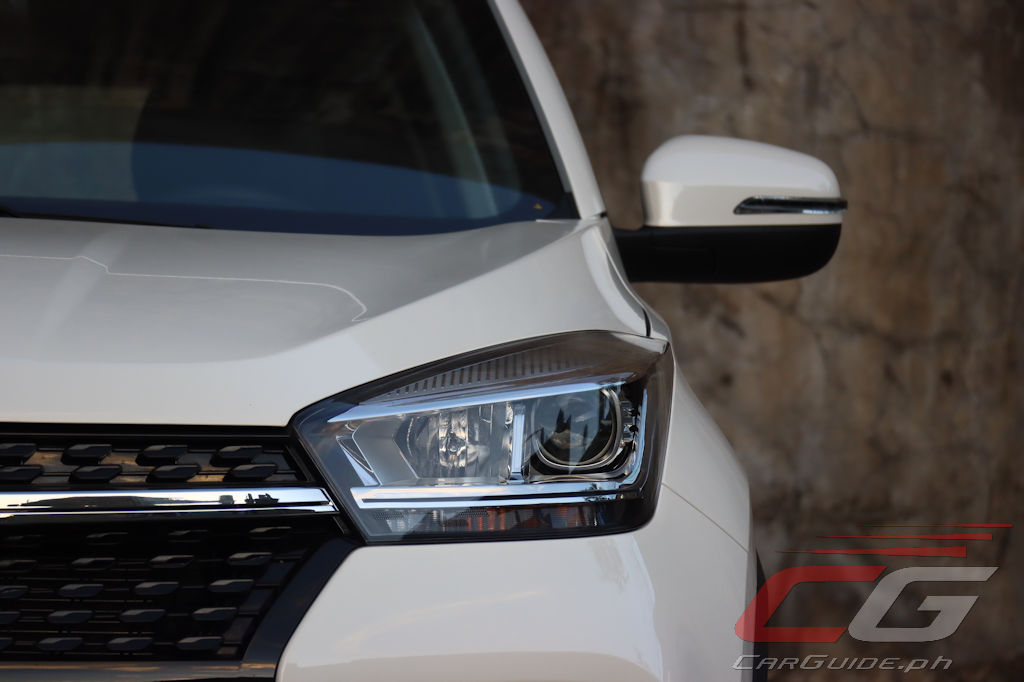
For starters, it looks pretty solid. Disregarding the unfortunately coined, “tiger crouching front-end,” the design itself is clean, albeit maybe bordering on the generic. Nonetheless, proportions are all good, and the form factor, particularly its generous 1.83-meter width makes it one of the biggest in its class. Topping out at P 950,000, this Luxury trim is well-speced too with 17-inch wheels, power folding mirrors, and a sunroof. And while halogen headlights are an acceptable trade-off for this price range, the decision to fit no-name tires (in this case, Chao Yang) is an oversight.

With a ground clearance nearing 200 mm and high-mounted seats, getting aboard the Tiggo 5X requires more of a slight hop than simply sliding the butt into the seat. Admittedly, this feels awkward at first, but it’s something that’s manageable for as long as the driver flexibility isn’t hampered. Once inside, the cabin’s reasonably well-built. Except for the soft topper on the dash and near the transmission console, the materials used here are generally hard to the touch; but surprisingly enough, it’s less scratchy than typical Korean plastics. Overall, it feels solid too, but there are minor quips like the flimsy feeling power mirror controls and rear view mirror day/night toggle.


The Tiggo 5X’s horizontal dashboard motif is supposedly reminiscent of something European-inspired, and for the most part, it pulls it off. The large digital LCD instrument cluster in front of the driver, and the 10-inch LED touchscreen infotainment system are both nice touches in this price range, and so are features like the push-button start/stop and electronic parking brake. However, there are some minor bits that could use some work. For example, the use of digital screens looks great, but they wash out in direct sunlight making it difficult to decipher not just what radio station’s currently playing, but at what speed the car’s going or the remaining fuel left. Then, there’s the climate control system itself. Adjusting the fan speed or temperature (it’s a manual system, mind you) makes use of physical knobs, but since the display is a pop-up screen in the laggy infotainment system, it can cause the driver to second-guess whether his command to up the fan speed, or lower the temperature was actually received or processed by the car. It’s a minor inconvenience for sure, but it’s one that’s a source of constant irritancy as well.

In terms of room, there’s nothing to complain about too. Thanks to its generous width, the Tiggo 5X’s shoulder room is more compact SUV than sub-compact, while the head- and legroom are certainly agreeable for both front and rear passengers. The rear passengers too are treated fairly well with three 3-point seatbelts, and something rather uncommon in this class—a center arm rest (though the demo unit didn’t have one). Sadly, Chery should have opted to fit three individual headrests rather than two at the back.


As a sub-compact crossover, the Tiggo 5X is positioned more as a city runabout, yet its performance suffers in the urban confines due to one thing: its portly weight. Tipping the scales at 1,321 kilograms, it’s actually heavier than the Kia Seltos or Honda HR-V, and for that, it taxes the 1.5-liter engine so much. With just 114 horsepower and 141 Nm of torque, pulling all that mass requires lots of effort (and prodding). The initial throttle response is strong, but it loses steam fairly quickly. What’s more, the CVT gearbox neuters whatever remaining performance’s left. The revs go up to peak torque (3,800 rpm), and calls it a day. It refuses to go any higher unless the accelerator’s pushed all the way down, and even then, it’s not the rev-happiest of engines. The net result of an overweight chassis and an overworked engine? 6.66 km/L in heavy traffic (12 km/h average). That said, as the speeds build up, the tables are turned. Overtaking must be carefully planned and executed for sure, but this is one sub-compact crossover that can eat countless miles with little difficulty.

The Tiggo 5X’s ride and handling story is near parallel to that of the powertrain. This isn’t a corner carver, even in the remote sense; instead, it’s a cruiser with a quiet, cushy ride. With a relaxed steering and some copious amounts of body roll, it behaves much bigger than its size suggests. It trades some of that agility, for a plush, controlled ride. The suspension tuning’s soft, enabling it to glide through rough roads, and hushed on the highways. Actually, it’s pretty mechanically sound if not for those little odds-and-ends that make some noise like the brake pedal spring, the hill assist engaging on and off, and even the electric power steering whirring when being turned. Again, these are minor inconveniences to an otherwise well-built crossover.


Overall, the Chery Tiggo 5X still lacks the polish of the more established sub-compact crossovers out in the market. Nonetheless, it proves how far this Chinese brand has come in the past 12 years. Not only have they managed to shed the last bit of facsimile design and engineering that plagued them before, but they’ve come up with a solid, reputable choice that’s fitted with a long list of standard equipment that makes it a great value. That, together with a confidence-inspiring warranty program could be what Chery needs to finally make a dent in the local automotive scene.


2020 Chery Tiggo 5X AT Luxury
Ownership 2020 Chery Tiggo 5X AT Luxury
Year Introduced 2019
Vehicle Classification Sub-compact SUV
Warranty 5 years / 100,000 kilometers,
10 years / 1,000,000 kilometers (powertrain)
The Basic
Body Type 5-door SUV
Seating 5
Engine / Drive F/F
Under the Hood
Displacement (liters) 1.5
Aspiration Normally Aspirated
Fuel Delivery EFI
Layout / # of Cylinders I4
BHP @ rpm 114 @ 6,150
Nm @ rpm 141 @ 3,800
Fuel / Min. Octane Gasoline / 91~
Transmission CVT
Cruise Control Yes
Fuel Economy @ Ave. Speed 6.66 km/L @ 12 km/h,
10.87 km/L @ 26 km/h
Dimensions and Weights
Length (mm) 4,358
Width (mm) 1,830
Height (mm) 1,670
Wheelbase (mm) 2,630
Curb Weight (kg) 1,321
Suspension and Tires
Front Suspension Independent, MacPherson Strut
Rear Suspension Torsion Beam Axle
Front Brakes Vented Disc
Rear Brakes Disc
Tires Chao Yang SU318a 215/60 R 17 H (f & r)
Wheels Alloy
Safety Features
Airbags 2
Anti-Lock Brakes (ABS) Yes, with EBD
Traction / Stability Control Yes
Parking Sensors Yes, Rear with Camera
Front Seatbelts 3-pt ELR with pre-tensioner x 2
Rear Seatbelts 3-pt ELR x 3
ISOFIX Child Seat Anchor Yes
Other Safety Features Hill Assist Control,
Tire Pressure Monitoring System
Exterior Features
Headlights Halogen
Fog Lamps Yes, Rear
Auto Lights No
Rain-sensing Wipers No
Interior Features
Steering Wheel Adjust Tilt
Steering Wheel Material Leather
Seating Adjustment (driver) Electric, 6-way
Seating Adjustment (front passenger) Manual, 4-way
Seating Surface Leather
Folding Rear Seat Yes, 60/40
On-Board Computer Yes
Convenience Features
Power Steering Yes
Power Door Locks Yes
Power Windows Yes
Power Mirrors Yes, w/ Fold
Proximity Key Yes
Climate Control Manual
Audio System Stereo
USB
Bluetooth
Apple CarPlay
Baidu CarLife
# of Speakers 6
Steering Controls Yes

Sunday, February 23, 2020

2020 Kia Seltos 2.0 SX vs 2020 Mazda CX-30 2.0 Pro


Subcompact crossovers are all the rage these days, and remarkably, it’s a segment that seems to find never ending niches. One of the most visible signs of this segmentation at work is through price—with subcompact crossovers costing anywhere from less than a million pesos to several million pesos. But what happens when segments meet—like the union in a Venn diagram? Things are bound to get interesting.

When Kia introduced the Seltos locally, they sought to compete in both low- and high-end segments using just one basic vehicle. It’s an interesting approach to say the least, and one that puts their new subcompact crossover somewhere between the deluge of Chinese brands (for the lower variants), and plusher offerings (for the highest variant), like this one, the Mazda CX-30. In Mazda’s case, they’ve opted to forego going affordable, and instead, opted to set their sights on the higher-end market. Their opposing market strategy is why the top-trim P 1.505-million Kia Seltos 2.0 SX can actually go against the P 1.490-million Mazda CX-30 Pro. The question is, which subcompact crossover ends up on top.


Exterior

To be fair, both of these crossovers are easy on the eye. Representative of their respective brand’s newest design language, they fit right into any chic or cosmopolitan setting. In short, you won’t be embarrassed if people see you alighting from either one at the country club. What is unique though is how Kia and Mazda approached their design.

On one hand, there’s this Starbright Yellow Kia Seltos—bold, brash, and maybe for the older set, on the verge of being over styled. Peter Schreyer and his team worked to give it a younger, K-pop generation persona, and this is immediately seen in the two-tone roof, LED lights that reach the front grille, and roof rails which look more ornamental than functional. It’s fitting for the Black Pink generation—and this is clearly one lady that doesn’t go out of the house without looking all glammed up.

On the other, there’s the Mazda CX-30. Compared to the Seltos, this one’s more for Ginza high fashion than Gangnam Street fashion. It’s refined, elegant, and even in its iconic new shade, Polymetal Gray, quite understated. Surprisingly though, it turns heads as much as the Kia. If the Seltos were Black Pink, the CX-30 would be Catriona Gray during No Make Up Monday. And while its inner beauty radiates, Mazda’s decision to put in bulb-type DRLs when the rest of the lighting package is composed of LEDs, is odd.

Winner: TIE


Interior

While exterior look is down to personal preference—do you prefer your women glammed up or dressed down—when it comes to the interior, there’s no doubting that the CX-30 takes the commanding lead here. Kia might have done well to add some character to the Seltos’s cabin, but it’s let down by its hard, scratchy plastics. Moreover, the sheer amount of blank button covers is a constant reminder that even in this 2.0 SX spec, lots of features didn’t make it locally. Meanwhile, designed to compete with more premium market choices, the CX-30, even in this basic Pro trim outshines the Kia. It loses all the tasty chrome and high-gloss bits; but poke around, and all that soft-touch goodness is still around. Even the steering wheel, finished in urethane, and the seats, covered in fabric are all well-made. Bonus points too for the refreshing two-tone black and blue treatment and the rear center armrest which isn’t present in the Seltos.

Winner: Mazda CX-30


Space and Practicality

As tall-riding hatchbacks go (that’s what crossovers are basically), these two are expected to give a certain level of utility to their owner. With that in mind, the Seltos turns the tables on the CX-30. It’s far and away the roomier of two, especially when it comes to the backseats. The lower belt line too make it feel less claustrophobic while improving visibility at the three-quarters rear. Oh, and the fact that the rear seats offer adjustable inclination makes the Seltos much more apt for family use. Now, if they would only redesign the rear speaker grilles as not to chafe the knee, that would make it perfect.

Conversely, the CX-30 is decided more personal. Upfront, there’s absolutely no problem. The dashboard gives off a snug, cockpit-like feel for the driver (which is always good), but at there’s a severe lack of knee room at the back (which is always bad). Moreover, with the rear seats up, the cargo space measures at 317 liters—smaller than even the Mazda3 (the Seltos stands at 433 liters). This brings up a frequently used adage when it comes to Mazdas: where did all that wheelbase go? Nonetheless, the CX-30, at least has a cargo cover which the Seltos doesn’t have. Oh, and it wins too when it comes to ergonomics and driver comfort.

Winner: Kia Seltos 


 Performance

The mechanical ingredients of the Seltos and the CX-30 are remarkably the same: a normally-aspirated 2.0-liter motor mated to an automatic transmission driving the front wheels. They differ greatly though in their execution.

The target, for Kia, it seems is the middle ground—people who’re really unsure of whether they want performance or economy. As a result, it’s a crossover that does a bit of both. With 149-horsepower and 179 Nm of torque at its disposal, its 2.0-liter reads as underpowered on paper. Still, it makes the most out of it with its trick IVT transmission. Basically, a CVT with a built-in shift logic, it makes the Seltos feel responsive be it city or highway speeds. Moreover, it’s quite economical at 9 km/L at 15 km/h, and 14.28 km/L at 36 km/h.

By comparison, the CX-30 goes straight for the enthusiastic set. While the CX-30 is already great to drive, thanks to the Pro’s smaller wheels, there’s less rotating mass for the 155-horsepower, 200 Nm of torque engine to overcome. In short, among the three available variants, this by far, is the most agile one. Steering is great, but believe it or not, the Mazda doesn’t feel as quick on its feet at low or moderate speeds. The ride’s decidedly firmer too. Moreover, the Kia’s perceived floatiness isn’t such a bad thing, specially to the “regular” crossover. At speed, the tables are turned, and the CX-30 comes alive. Not only is it more obedient, but it’s the one that turns any grimace into a smile. Plus, on the highway, it’s way quieter than the Seltos. As fun as it is though, its vaunted Skyactiv-G engine merely matches Seltos’s fuel economy in the city, registering the same 9 km/L (average 15 km/h); it does, however, perform better at higher speeds: 15.87 km/L (average 36 km/h).

Winner: TIE


Value for Money

This is actually the most interesting part. With just a P 15,000 price gap, favoring the CX-30, it’s quite amazing to see how the top-trim Selos 2.0 SX somewhat matches the base CX-30 Pro in major features. Drivetrain aside, both have LED headlights, smart keyless entry with push-button start/stop, automatic headlights, and a fairly advanced infotainment system with Apple CarPlay and Android Auto. Both also offer the same level of safety equipment—6 SRS airbags, ABS with EBD, stability control, and a rear backup camera. The Seltos lodges a punch with LED DRLs, larger wheels, leather steering wheel, part-leatherette seats, lit-vanity mirrors, cruise control, and automatic climate control. Meanwhile, the CX-30 counterpunches (albeit not as convincingly) with rain-sensing wipers, an electronic parking brake with auto hold, a rear center armrest, and a rear cargo cover. Overall, it’s a win-some-lose-some scenario. The CX-30’s superior fit and finish aside, if everything were based on spec, the Seltos ekes out a win.

Winner: Kia Seltos


Verdict

With the continued sub-segmentation of the sub-compact crossover segment, in the end, it’s the buyer that ends up spoilt for choices. You can’t go wrong with either the Kia Seltos or the Mazda CX-30—both are worthy of your consideration, and both offer their own respective strengths in an increasingly crowded field. The Seltos is for those who’re mind over heart. It’s the more practical of the two, with slightly better fuel economy, larger interior room, and a nudge better equipment level. On the other hand, the CX-30 is for those who’re seeking an emotional, rather than rational choice. It’s not exactly the most practical in terms of interior room or cargo size, but it makes up for it with its stellar on-road character and unparalleled refinement.

After all’s said and done though, it’s the Seltos that wins here. As an enthusiast, it’s easy to pick the CX-30 not just because it looks beautifully elegant, but because it’s also well-crafted as well. However, it’s the Seltos that appeals to larger demographic—those who want practically just as much as style; comfort just as much as sportiness. Mazda put up a good fight there, and the results would have been different if they just added a bit more in terms of equipment level. As it stands though, because it successfully treads the middle ground well, it’s the Kia that wins here.

Winner: Kia Seltos


2020 Kia Seltos 2.0 SX vs 2020 Mazda CX-30 Pro
Ownership 2020 Kia Seltos 2.0 SX 2020 Mazda CX-30 Pro
Year Introduced 2019 2019
Vehicle Classification Sub-compact Crossover Sub-compact Crossover
The Basics
Body Type 5-door SUV 5-door SUV
Seating 5 5
Engine / Drive F/F F/F
Under the Hood
Displacement (liters) 2.0 2.0
Aspiration Normally Aspirated Normally Aspirated
Fuel Delivery EFI Direct Injection
Layout / # of Cylinders I4 I4
BHP @ rpm 149 @ 6,200 155 @ 6,000
Nm @ rpm 179 @ 4,500 200 @ 4,000
Fuel / Min. Octane Gasoline / 91~ Gasoline / 91~
Transmission CVT 6AT
Cruise Control Yes No
Fuel Economy @ Ave. Speed 9 km/L @ 15 km/h,
14.28 km/L @ 36 km/h
9 km/L @ 15 km/h,
15.87 km/L @ 36 km/h
Dimensions and Weights
Length (mm) 4,370 4,395
Width (mm) 1,800 1,795
Height (mm) 1,615 1,540
Wheelbase (mm) 2,630 2,655
Curb Weight (kg) 1,295 1,380
Suspension and Tires
Front Suspension Independent, MacPherson Strut Independent, MacPherson Strut
Rear Suspension Torsion Beam Axle Torsion Beam Axle
Front Brakes Vented Disc Vented Disc
Rear Brakes Disc Disc
Tires Kumho Ecsta HS51
215/55 R 17 V (f & r)
Yokohama BluEarth-GT AE51
215/65 R 16 H (f & r)
Wheels Alloy Alloy
Safety Features
Airbags 6 6
Anti-Lock Brakes (ABS) Yes Yes
Traction / Stability Control Yes Yes
Front Seatbelt 3-pt ELR with pre-tensioner x 2 3-pt ELR with pre-tensioner x 2
Rear Seatbelt 3-pt ELR x 3 3-pt ELR x 3
Traction / Stability Control Yes Yes
ISOFIX Child Seat Anchor Yes Yes
Parking Sensors Rear, with Camera No, with Rear Camera
Other Safety Features Hill Start Assist
Hill Descent Control
Hill Start Assist
Exterior Features
Headlights LED LED
Fog Lamps Yes, LED Yes, Headlamp Integrated
Auto Lights Yes Yes
Rain-sensing Wipers No Yes
Interior Features
Steering Wheel Adjust Tilt/Telescopic Tilt/Telescopic
Steering Wheel Material Leather Urethane
Seating Adjustment (driver) 6-way, Manual 6-way, Manual
Seating Adjustment (front passenger) 4-way, Manual 4-way, Manual
Seating Surface Fabric/Leatherette Fabric
Folding Rear Seat Yes, 60/40 Yes, 60/40
On-Board Computer Yes Yes
Convenience Features
Power Steering Yes Yes
Power Door Locks Yes Yes
Power Windows Yes Yes
Power Mirrors Yes Yes, with Fold
Climate Control Auto Manual
Proximity Key Yes Yes
Audio System Stereo
USB
Bluetooth
Apple CarPlay
Android Auto
Stereo
USB
Bluetooth
Apple CarPlay
Android Auto
# of Speakers 6 8
Steering Controls Yes Yes

Sidebar Title

Main Tab Menu